The best rhinoplasties do not look like rhinoplasties. Dr. Goldman's philosophy is to individualize each patient's treatment to create a result that is harmonious with their face or body. No two cosmetic procedures are therefore the same. This is especially true with rhinoplasty (nasal reshaping).
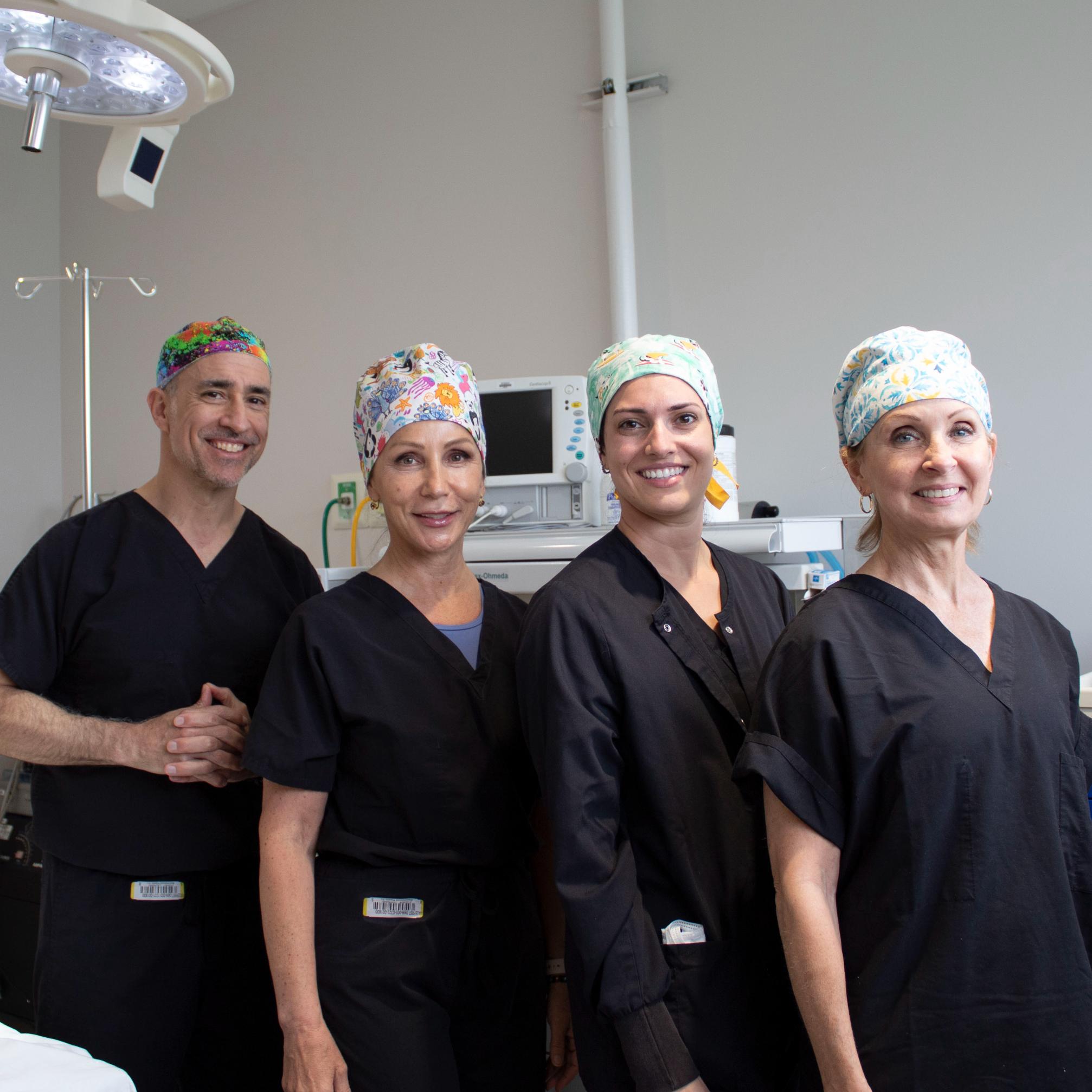
Dr. Goldman is a rhinoplasty specialist and is triple-board-certified in facial plastic surgery, plastic surgery, and ear nose throat surgery, making him uniquely qualified for this procedure. More importantly, he is committed to personalize, compassionate patient care. He is well-known for his technical skill and artistic sense in creating dramatic but natural looking aesthetic enhancements.
Rhinoplasty, commonly known as a nose job, is a surgical procedure designed to reshape the nose to enhance its appearance while also improving nasal breathing. As one of the most intricate cosmetic surgeries, rhinoplasty requires a delicate balance between achieving a noticeable, dramatic result and ensuring that the outcome looks natural and harmonious with the rest of the face.
Rhinoplasty can address a variety of concerns, like a hump or bump on the bridge of the nose, crookedness or asymmetry, excess width or roundness of the nasal tip, or other issues. Internal blockages or other structural issues can be addressed at the same time as the rhinoplasty.
Multiple technical variations of rhinoplasty exist and multiple maneuvers are performed with any rhinoplasty, so it is important to understand your options, and the best technique for you. During your consultation, Dr. Goldman and his team will explain these methods in detail and develop the best surgical plan for you, based on your physical characteristics and personal preferences. Each rhinoplasty is tailored to the individual patient.
Dr. Goldman utilizes both open and closed (endonasal) rhinoplasty approaches. The open approach uses a small incision on the columella (the skin bridge between the nostrils at the bottom of the nose). This small scar is rarely noticeable to others and heals quickly, so it does not constitute a significant difference between the two techniques. The closed approach utilizes incisions entirely within the nose. From a recovery standpoint, the main difference between the two approaches is that the open approach generally has more swelling at the nasal tip.
The open approach is generally considered a more powerful technique, allowing more control in performing aesthetic changes to the nose. Patients who require more significant aesthetic enhancement, especially changes to the nasal tip or correction of crookedness, generally benefit from an open rhinoplasty. Patients who need more minor or subtle changes are usually candidates for an endonasal rhinoplasty. Options are always discussed with you.
Finding the right doctor can be difficult. Word of mouth is one of the best ways to identify a potential surgeon because such recommendations generally come from other patients who have been treated by that physician and have had a positive experience. The Internet, websites, and social media are obvious ways to do research about physicians, although it can be difficult to assess the legitimacy of this information, as it is with all information on the Internet.
Evaluating a surgeon's training and qualifications is important, which is why board certification is useful. For rhinoplasty, board certification in Plastic and Reconstructive Surgery or Facial Plastic and Reconstructive Surgery is important. Many facial plastic surgeons are also trained in Otolaryngology/Head and Neck Surgery. Dr. Goldman has board certification in all three of these fields, one of only a small number of surgeons nationally to have achieved this distinction.
Physician websites can give you a sense of the qualifications, experience, personality, and results of the physician or practice. Written explanations (like this one) can give you a sense of whether the practice’s philosophy matches your own perspective. Before and after pictures allow you to assess real results from that practice and whether or not you like that surgeon's artistic style.
Ultimately, consultation is necessary (either virtual or in person) to determine if a surgeon and their practice is right for you. Consultation will give you the most accurate sense of the surgeon’s personality, the efficiency and competence of their team, and most importantly will give you the opportunity to see if their treatment plan, their surgical plan makes sense to you.
Doctors and their staff should always be open to questions. If you are not comfortable with the treatment plan, the practice's communication style, or other factors, it may be worth seeking another consultation. Most patients know if the doctor is right for them after consultation. In fact, many patients have a very good sense of this before they even walk in the office from websites and social media. But never be afraid to ask more questions, do more research, or take more time before deciding to do any surgery.
The nasal septum is the thin wall of bone and cartilage that separates the right and left sides of the inside of the nose. A septoplasty is any procedure that straightens or otherwise alters the septum. When the septum is deviated or crooked, it can obstruct airflow, cause breathing difficulties, and contribute to other nasal issues such as chronic sinus infections and snoring. It is common to perform septoplasty in conjunction with rhinoplasty (the combination is called a septorhinoplasty) because most people do have some degree of crookedness to their septum.
Correcting crooked or prominent areas of the septum can help open the nasal airway and improve nasal breathing. There can be some indirect improvement on sinus infections or snoring (although the use issues usually need to be treated directly with other procedures). In addition, cartilage from the septum is often used in rhinoplasty to improve the internal structural support of the nose. So septoplasty may be used to obtain cartilage for the rhinoplasty.
When a septoplasty was performed by itself, an incision is made on the septum inside the nose. Excess, crooked, or irregular cartilage and bone were removed, leaving good structural support to the septum. When performed with the rhinoplasty, the septum is usually approached through the rhinoplasty exposure. In some cases, additional techniques or grafts may be used to support the newly positioned septum and ensure stability. The goal is to remove any obstruction, to open the nasal airway.
This procedure is typically performed on an outpatient basis under general anesthesia. Dr. Goldman does not use nasal packing (gauze placed inside the nose after surgery). Dr. Goldman does use soft, silicone splints in most cases. These are removed 6 to 7 days after surgery in the office.
Septoplasty affects the inside of the nose and is intended to improve nasal function. It does not have significant effects on the appearance of the nose, although a subtle straightening effect may occur on the lower two thirds of the nose from septoplasty alone. If you’re interested in cosmetic changes, rhinoplasty will be needed in addition to septoplasty.
A deviated (crooked) septum can obstruct breathing from one or both sides of the nose, making the nose feel congested. This may be most noticeable when exercising or lying down. Turbulence that results from obstruction inside the nose can cause drying, which can cause nosebleeds. Septoplasty is not meant to treat chronic sinus disease, but some patients have noted that they get fewer sinus infections after septoplasty.
Non-surgical rhinoplasty, often referred to as a liquid nose job, is an advanced form of cosmetic injection that utilizes injectable fillers such as Restylane™ or Radiesse™ to reshape the nose without surgery.
Small, precise amounts of filler are injected into targeted areas of the nose in order to enhance and refine the appearance of the nose. This approach can effectively address a range of aesthetic concerns, including camouflaging a hump on the nasal bridge, narrowing or enhancing the appearance of the nasal tip, and correcting asymmetries. Since the procedure is done in the office, like other filler injections, there is no need for anesthesia. Downtime is minimal. Most patients experience little to no bruising and only mild swelling. The entire process typically takes just a few minutes. Cost is typically significantly less than surgical rhinoplasty but more than less technically complex facial filler injections.
There are two main disadvantages to nonsurgical rhinoplasty:
Patients should keep in mind these considerations when comparing nonsurgical rhinoplasty to traditional rhinoplasty. While non-surgical rhinoplasty can be an excellent option for enhancing certain features, it may not be suitable for patients seeking permanent or more decisive changes.
When performed by a skilled and experienced injector, liquid rhinoplasty is safe with very high satisfaction rates. As with all facial filler injections, however, there are rare instances of filler getting into one of the tiny arteries of the face. Filler can then block blood flow within these tiny arterial branches, causing skin necrosis (a patch of skin can die, scab over, and scar) or blindness if filler travels to the eye. These risks are quite rare but can occur with filler injected anywhere in the face, not just the nose. Every patient undergoing facial filler injection should be aware of these risks.
Other risks of using dermal fillers include asymmetry, lumpiness or nodularity, and bruising. It’s also important to remember that with all surgical and non-surgical procedures, results vary, and there are no guaranteed results.
Prospective patients considering nonsurgical rhinoplasty, other facial filler injections, or surgical rhinoplasty should find a physician comfortable and experienced with all of these techniques. Dr. Goldman is one of only a handful of surgeons who is triple board-certified in Facial Plastic Surgery, Plastic Surgery, and Otolaryngology/Head and Neck Surgery. He has extensive experience with both surgical and nonsurgical procedures, making him ideally suited to help you understand the differences between these procedures and determine which option is best for you.