The lip lift has gotten increasing attention on the Internet lately. There are two main patient demographics interested in this procedure: The lip lift is most commonly performed for facial rejuvenation patients (usually in conjunction with the facelift) but is increasingly common in younger patients who have been using lip fillers and want a more dramatic, lasting result.
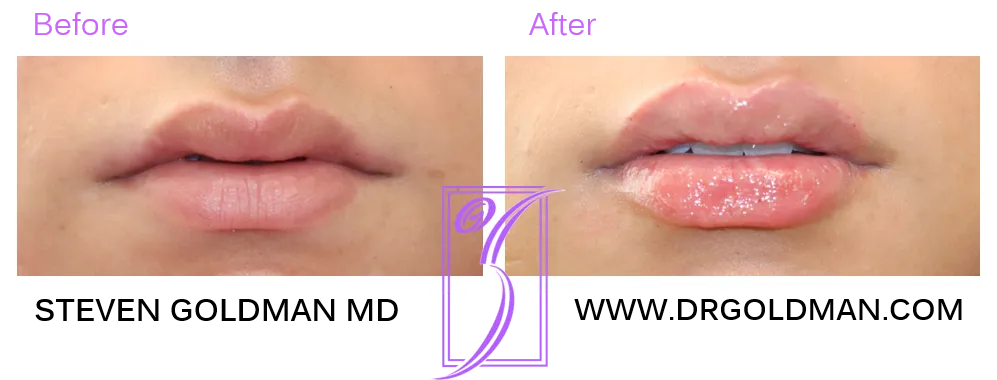
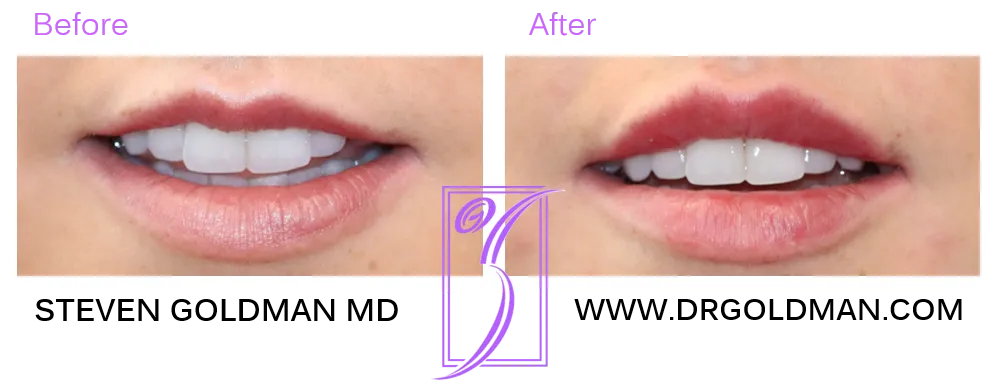
Goals of the lip lift include: shortening the height of the skin of the upper lip (above the red part of the lip); elevating and everting the red portion of the lip (the vermilion); and improving the shape of the lip, emphasizing a natural cupid's-bow shape.
With age, the skin above the upper lip tends to elongate, while the red part of the lip tends to thin and become deflated. The lip itself may also flatten, losing curvature and shape. The lip lift can rejuvenate by reversing these changes.
By itself, the lip lift can be performed under local anesthesia. An incision is used at the base of the nose. Younger patients tend to have thicker scarring, so patient education and selection are critical, especially in young patients.
An important consideration is that the upper front teeth (the incisors) do not normally show in the mouth at rest, but do show during smiling. Ideally, the lip lift mimics this normal function. Overcorrection can cause the “bunny rabbit” deformity in which the incisors are exposed even at rest, which can be obvious and unesthetic, so lip lifts should be designed appropriately.
The patient who has significant incisor show at baseline but a long upper lip. Tooth show can be expected to increase when the upper lip is shortened, and excessive tooth show is not aesthetic. Such patients may benefit from orthognathic (upper jaw) surgery and are generally referred to an orthognathic surgery.
Patients who have a short distance between the nose and the red part of the lip. Making this distance excessively short can look disproportionate and unaesthetic. Such patients may benefit from orthodontia to increase in size or show while leaving the lip alone.
Patients who have a short distance between the nose and the red part of the lip. Making this distance excessively short can look disproportionate and unaesthetic. Such patients may benefit from orthodontia to increase in size or show while leaving the lip alone.
Patients who naturally have an overly pronounced cupid's bow with a high central portion of the lip. Such patients are generally not good candidates for the lip lift, because the lift tends to exaggerate this shape. Conversely, patients who have down-turned corners of the mouth may also see this shape become exaggerated if the central lip is elevated with a lip lift. These patients may need corner lift surgery, which is less common and can leave more noticeable scarring.
Patients who have a prominent nasal sill (a blunted angle between the nose and the upper lip). These patients are also more likely to have a visible scar at the base of the nose and therefore may need treatment of their nose with rhinoplasty before having a lip lift.
Unrealistic goals. As with all cosmetic surgery, patients who have unrealistic goals are not good candidates for surgery–especially in lip patients, if their goals are likely to leave them with the "bunny rabbit" deformity, with excess incisor show. Also, patients have to understand that the scar at the base of the nose is more visible than for typical facelift scars. Patients who would be excessively bothered by the scar should not have this procedure.
Recovery is usually straightforward, especially when the procedure was performed under local anesthesia. Most patients take only Tylenol, but may take narcotics for 2 to 3 days occasionally. Patients can shower the next day. Non-dissolvable sutures are usually used for this procedure. These are removed in a week in the office.Patients are allowed to exercise vigorously in 2 weeks. Bruising and swelling is generally noticeable to others for about 2 weeks, but bruising is always highly variable between patients. Most patients are back to work in 2 to 3 days, as long as they are comfortable showing bruising and swelling or can work from home.
If you are considering a lip lift to enhance your facial appearance and rejuvenate your smile, schedule a consultation with Dr. Goldman today. Dr. Goldman will carefully assess your needs and provide personalized recommendations to help you achieve the natural, beautiful results you're looking for.